

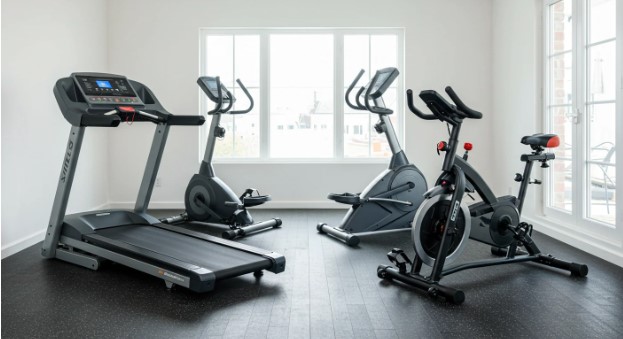
The decision to invest in home cardio equipment is a meaningful commitment to your health and fitness. With a wide range of options available across different price points and exercise modalities, it is worth taking the time to evaluate what will genuinely serve your needs before making a purchase.
The right piece of equipment is one that you will use consistently, that fits your physical capabilities, and that delivers the type of workout you actually enjoy performing.
Exercise Bikes are Most Accessible
Cycling is one of the most universally accessible forms of cardiovascular exercise, making stationary exercise bikes one of the most popular home fitness purchases across all age groups. They offer a low-impact workout that raises heart rate effectively without the joint stress associated with weight-bearing activities.
Upright bikes simulate traditional road cycling and engage the core more actively, while recumbent models provide a more supported, seated position that suits users with back or joint issues.
Matching Equipment to Your Fitness Goals
Different cardio machines suit different training objectives. If your primary goal is improving aerobic endurance and burning calories efficiently with minimal joint impact, an exercise bike or elliptical machine is a strong choice.
If you want to combine cardio with upper body and full-body muscular engagement, a rowing machine offers more comprehensive conditioning in a single exercise. Treadmills suit those who prefer running and need to train regardless of outdoor weather conditions.
Space and Practicality Considerations
The physical footprint and weight of fitness equipment are practical considerations that deserve careful attention before purchase. Measure the space where the equipment will be placed, including ceiling height for equipment with any vertical movement.
Consider whether the machine needs to be moved for storage or cleaning and whether its weight makes that realistic. Folding designs are available for some categories of cardio equipment and can reduce the storage space required significantly. Also think about the noise level of the machine.
Quality Indicators Worth Evaluating
The home fitness equipment market spans a wide quality range, and price alone is not a reliable indicator of value. Look for products with robust steel frame construction, smooth and consistent resistance adjustment, comfortable and adjustable contact points such as the saddle, handlebars, or footrests, and reliable performance monitoring.
Manufacturer warranty length and the availability of replacement parts and servicing are also worth investigating before committing. Reading detailed reviews from verified buyers who have used the equipment for six months or more provides the most realistic picture of real-world performance and durability.
Getting Started and Staying Consistent
Even the highest quality fitness equipment only delivers results if it is used consistently. Starting with an achievable session frequency, such as three times per week, and gradually building volume and intensity is more sustainable than attempting to exercise every day from the outset.
Varying the format of your sessions, alternating between steady-state and interval training for example, helps maintain engagement and produces better fitness adaptations than repeating the same workout indefinitely.
Conclusion
Choosing home cardio equipment is a personal decision that should be based on your fitness goals, available space, physical needs, and budget. Exercise bikes stand out as an excellent all-around option for a wide range of users, combining effectiveness, low impact, and ease of use in a format that suits both beginners and experienced trainers.
With quality products available across different price points and form factors, finding a bike that fits your home and your training ambitions is more achievable than ever.